Water Damage Restoration in Quail Valley, CO
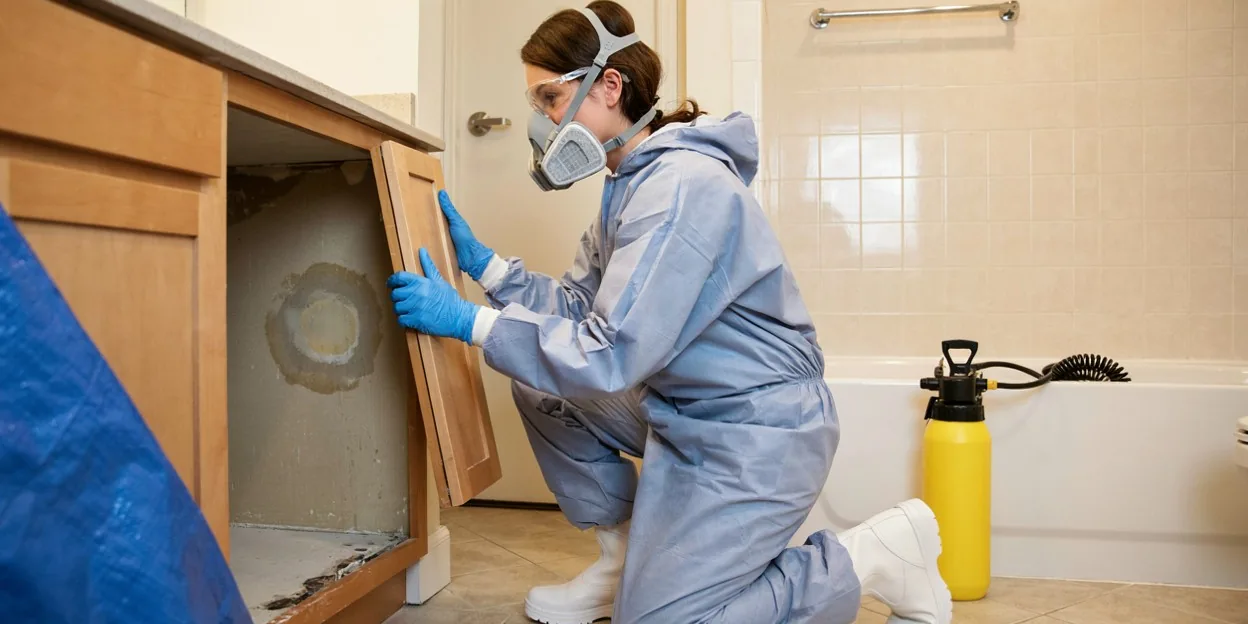
Quail Valley is a 2000s subdivision in north Thornton, part of the wave that pushed the city north of 136th Avenue with two-story houses on full basements and ranches on slabs. Houses of this vintage have PEX plumbing with a manifold in the basement ceiling, a laundry on the second floor, and a tight envelope that holds humidity once a basement gets wet. The ground is high clay plain with long views east toward Barr Lake, and it sheds storm water fast until the detention ponds fill and the window wells start to take it.
This site puts Quail Valley homeowners through by phone to an independent local water damage provider.
A tight 2005 house holds moisture once it gets in, and a basement that smells damp three days after a storm has drywall that is still wet behind the paint. Keep the basement door closed, do not open the windows to air it out, and let the crew set a dehumidifier sized for the space. Opening the house to a dry Colorado afternoon feels right and slows the drying down.
Quail Valley water damage in a house from 2005
A basement that took water at a north-side window well after a thunderstorm is a basement flooding cleanup. A laundry hose on the second floor that let go and drained into the great room ceiling is a water extraction job first and structural drying after. A garage-wall line that split on a subzero night is a frozen pipe cleanup.
Quail Valley's view to the east
The 2,715-acre Barr Lake State Park on the horizon east of the neighborhood is a reservoir on the same shallow water table Quail Valley sits above, and when it is full the ground under north Thornton is full too. Rebuild permits go through the City of Thornton.
Call (720) 735-3725 and say what you found. An independent local water damage provider serving Quail Valley takes the call.
Services Available in Quail Valley
Basement Flooding Cleanup
Water pumped out of a finished or unfinished Thornton basement, then the bottom of every wall and the slab metered to see what stayed wet.
Water Extraction
Standing water pulled off carpet, tile, wood, and concrete on any floor of the house, with the first moisture readings taken the same visit.
Structural Drying
Air movers and dehumidifiers set from daily readings until subfloor, studs, and drywall reach their dry target in a dry-climate house.
Frozen Pipe Cleanup
Cleanup after a supply line froze in a garage wall, crawl space, or north-facing wall during an arctic night and split when it thawed.
Burst Pipe Water Damage
A failed supply line, a cracked fitting, or an old galvanized run in a 1950s ranch let go, and the rooms it soaked get pumped out and dried.
Water Heater Leak Cleanup
The tank in the basement utility corner rusted through overnight, and the floor, framing, and stored boxes it soaked get dried out.
Roof Leak and Hail Water Damage
Wet attic insulation, ceilings, and walls dried after a hailstorm, a wind-torn shingle, or an ice dam let meltwater into the house.
Leak Detection
A high Thornton Water bill, a warm patch on a slab floor, or a damp spot with no visible source tracked to the pipe behind it before walls open.